HOUSE SYSTEM
HOUSE SYSTEM
Unite. Contribute. Lead.
Formally adopted by the Government of Tamil Nadu · November 2024 · 37,500+ schools
A school-wide governance reform that restructures every government school into smaller peer communities — where every student belongs, has a role, and is accountable to peers. Not a co-curricular add-on. A structural redesign of how schools function from the inside out.
The Problem House System Addressess:
- Low Attendance: District daily attendance averages 67%. Students who miss school lose instructional time that is never recovered, compounding gaps year after year.
- Teacher burnout and overload: 70% of teachers report burnout from expanding administrative loads. With large class sizes, identifying students who have fallen behind without peer-support structures is practically impossible.
- Social exclusion and inequity: Caste-based exclusion is documented in up to 30% of Tamil Nadu schools. Declining female participation in leadership further reduces engagement for the most marginalised.
How it works
Every student is randomly allocated to a cross-grade, cross-gender, cross-caste House. Leadership roles are distributed. Accountability is collective. The system operates within the existing school day — no extra time needed.
School leaders / Principals
Use attendance and learning-support data to drive house-wise academic reviews. Embed the House System into the daily functioning of the school.
House System In-charge teachers
Run Micro Innovation Projects (MIPs) targeting attendance gaps and learning challenges. Bridge leadership to students on the ground.
Elected student leaders (House Captains)
Support peers, track attendance, and drive peer learning. Keep every student visible and accountable within the House.
District education officials
Act as guardians of the House System. Track implementation fidelity across school clusters through block-level review mechanisms.
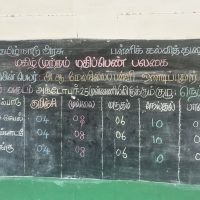
Numbers that grew
Nagapattinam — pilot to district scale
Tirunelveli — ongoing scale-up
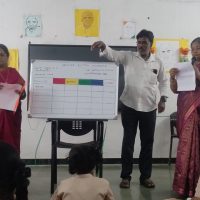
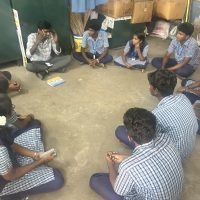
Leadership Moments from the field