– Preethi G, Communications Manager
“Do you know how the solar system was created?”
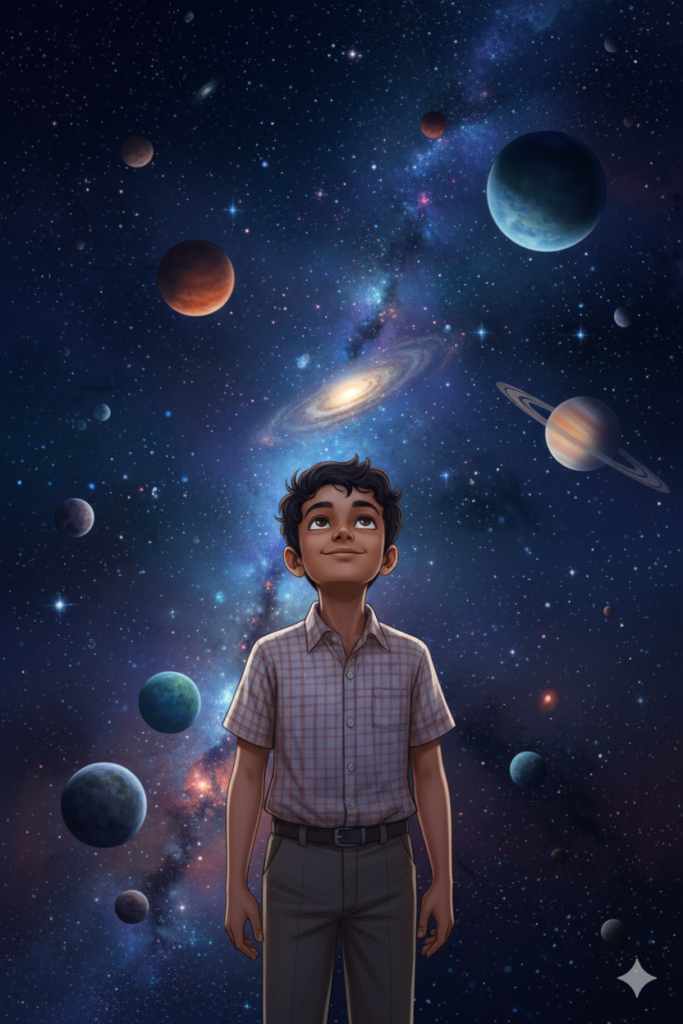
That was the first thing Simon asked me. Not hello or who are you, just a direct, curious, confident question. For a moment, I forgot I was the adult in the room. I hesitated and offered an unsure answer, drawing from what little I remembered. He listened carefully and corrected me. “That was much before, akka,” he said. Later that evening, I looked it up and realised he was right.
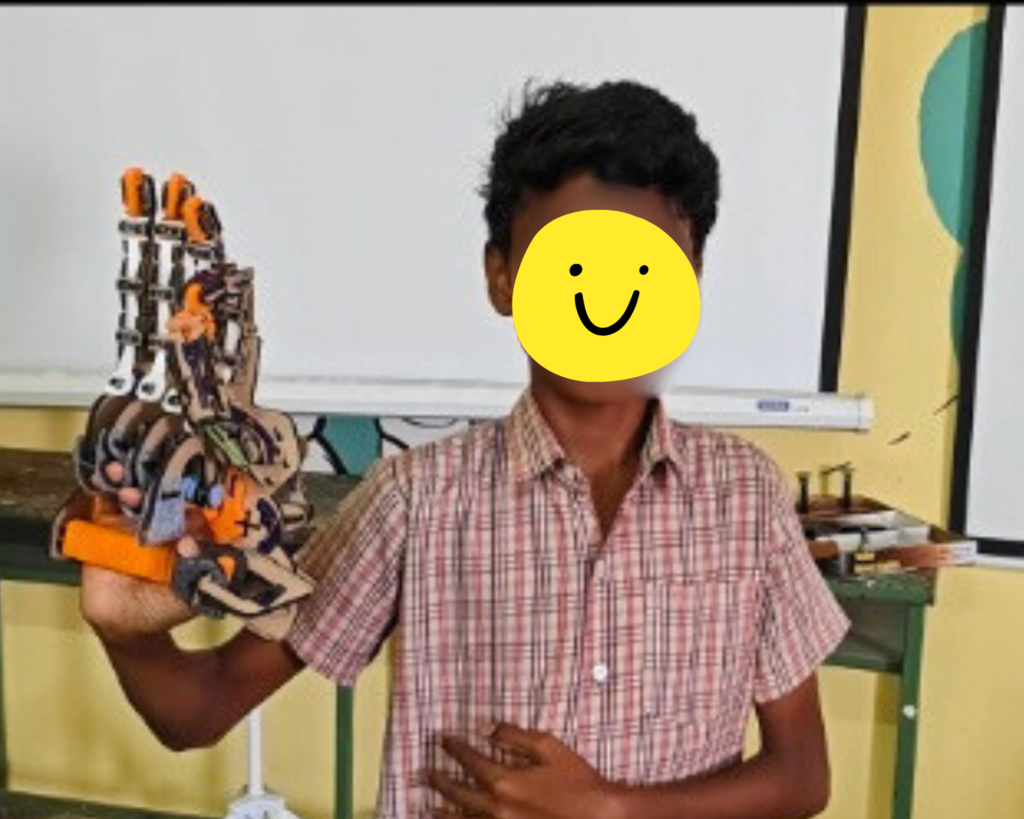
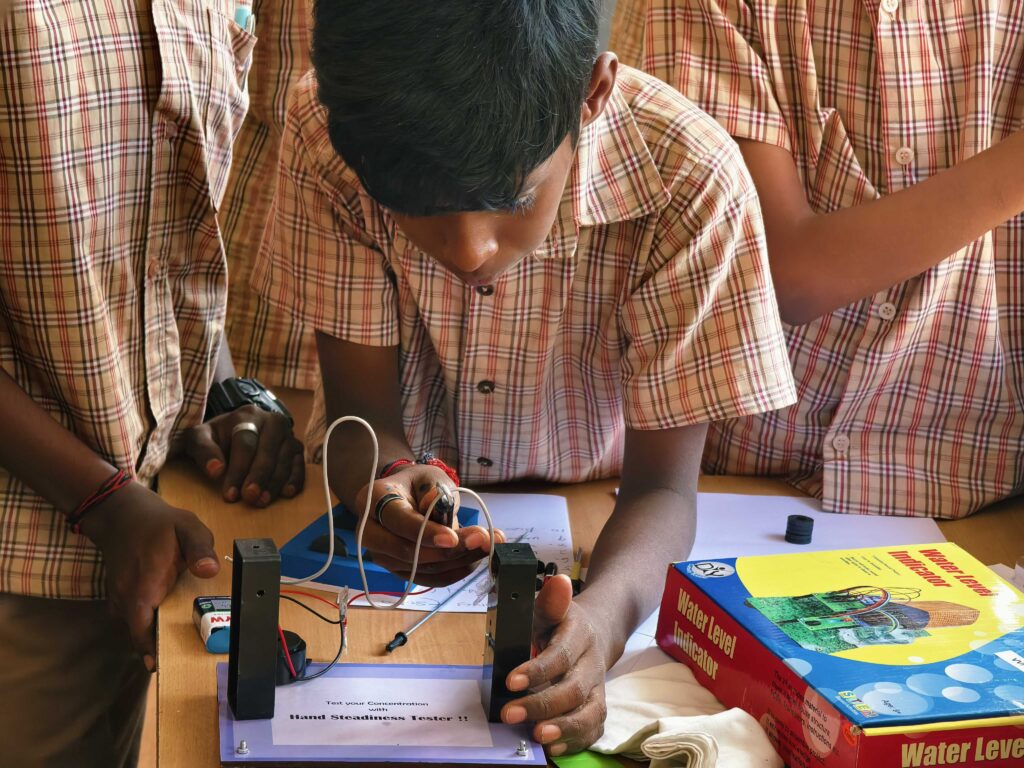
This exchange did not happen in a regular classroom or during a science period. It happened in a learning centre. Simon had walked in with two other students. They were in Grade 8. Without waiting for permission or instruction, he began showing me what he had built: a truck, a mechanical hand, a movable car. He moved quickly between ideas, his hands returning again and again to the models as he spoke. This was not a presentation or an assignment. It was a child thinking aloud, trying to make sense of what he had created, and inviting someone else into that thinking.
LEARNING IN MOTION
As the conversation continued, Simon moved naturally from objects to ideas. He asked questions about science that I could not immediately verify. Did I know what was hotter than the sun? Did I know where it existed? The factual accuracy of his questions mattered less than the posture he held while asking them. He was not performing knowledge. He was exploring it. Simon did not fear being wrong, hesitate to question an adult, or worry that his curiosity would be judged.
Children often build understanding through questioning, conversation, and trying out ideas. In its early stages, learning rarely appears as polished answers; it shows up as speculation, challenge, and intellectual risk-taking. What I was witnessing was not a lack of learning. It was learning in motion.
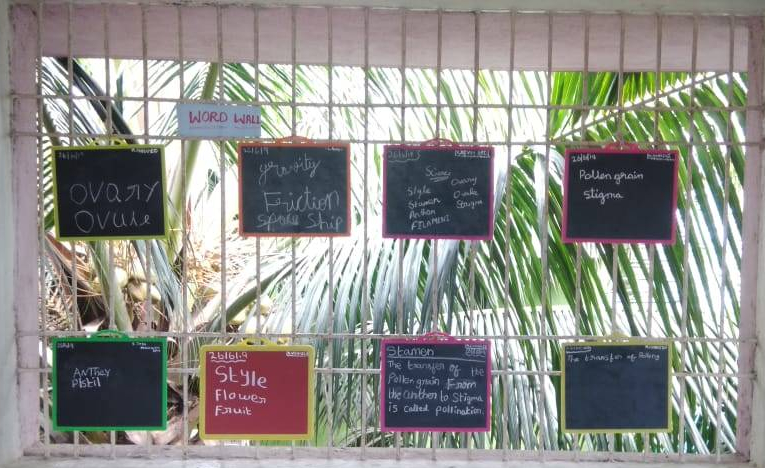
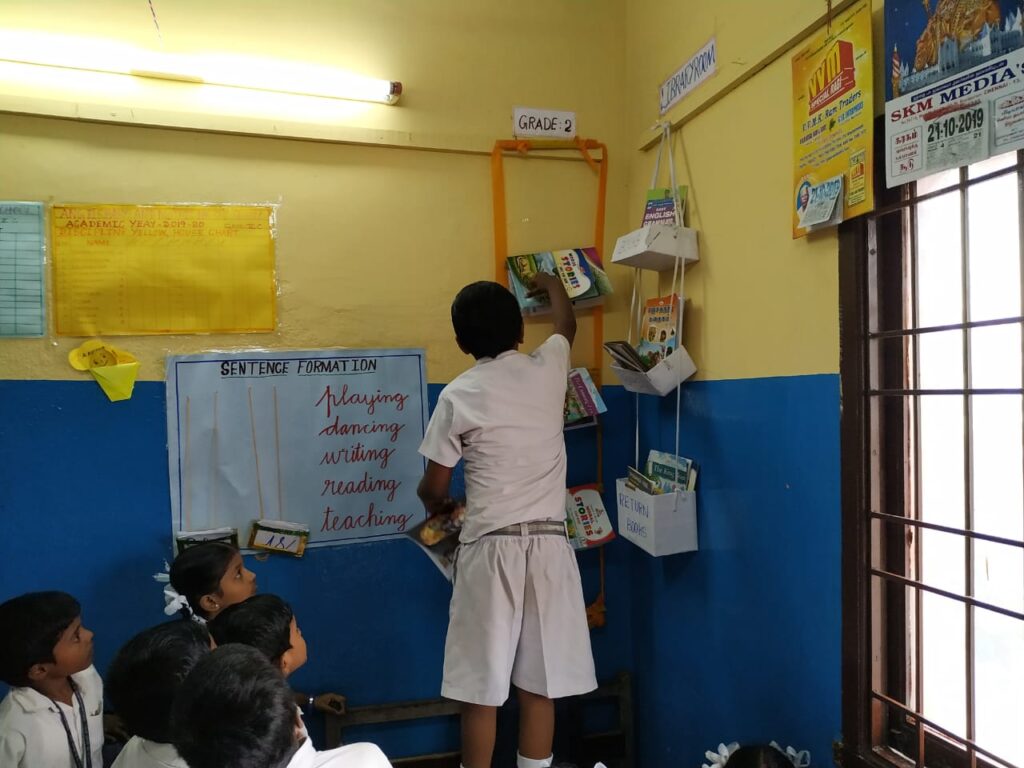
Learning centres are intentionally designed spaces equipped with materials such as STEM kits, games, sports resources, craft items and digital tools, and projectors. More importantly, they are environments created for children to explore, experiment, and discover interests, allowing them to experience learning as a process rather than a performance.
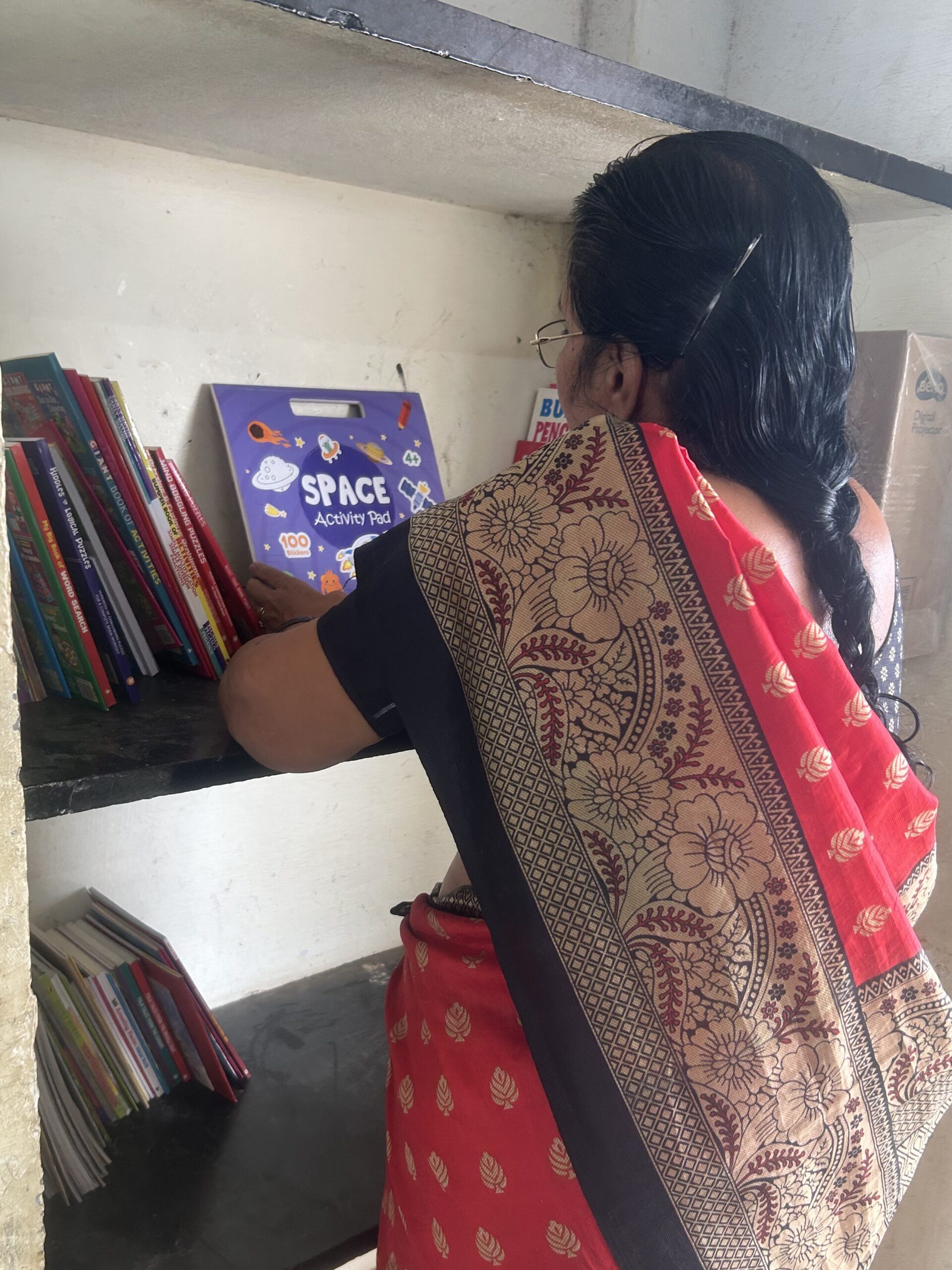
The learning centre had not directly taught Simon these ideas. Instead, it had been intentionally designed to allow such learning behaviours to surface. It created conditions where thinking aloud was possible, uncertainty was tolerated, and curiosity could unfold without the immediate pressure of evaluation. In that environment, Simon could exist as a learner before being measured.
As the interaction unfolded, a teacher walked in and spoke about Simon. She described him as a focused learner who needed considerable guidance to improve academically. There was no dismissal in her observation. It reflected how the system currently understands learning. But the teacher’s comment created a dip in Simon’s confidence. But in no time, he resumed his science stories.
I learnt that two truths existed at the same time.
- Simon struggled with academics.
- Simon demonstrated strong scientific curiosity.
Assessment systems are optimized for the first truth. Struggle is measurable through test scores, error patterns, and grade retention. However, curiosity requires someone to be present, to listen, to notice the quality of questions asked rather than answers given. Our learning centers are designed precisely for this: creating conditions where the second truth becomes as visible as the first, so we can support both.
Through conversational data, change stories, teacher reflection, participatory documentation: Students explaining their own work, provides a window into their thinking. When Simon showed me his builds, his language revealed his conceptual understanding.
Learning centres play a specific role within this gap. They hold space for early learning signals long enough for them to mature. In systems that prioritise speed, coverage, and measurable outcomes, such spaces slow learning down deliberately. They resist premature judgment and allow curiosity to deepen before it is required to prove itself.
Before leaving that day, I said something to Simon that I still think about. “If you do not become a science expert,” I told him, half smiling, “I am going to be disappointed.” The words stayed with me. Why did I feel the need to imagine his future at all? In that moment, I realized I was responding to something else. The rare intensity of his curiosity and a quiet fear of what often happens to it in our system. I did not want that spark to become another lost possibility. But children do not need us to project outcomes for them. What they need is something simpler and far more difficult: for their curiosity to be protected in the present.
Our learning centres are designed to hold space for early learning signals that the broader system often overlooks. Across DEEP’s 16 learning centres in Coimbatore, we have seen how the right conditions can awaken curiosity, deepen engagement, and restore the joy of learning. Yet these spaces also surface a critical question: what happens when children leave environments that protect curiosity and return to classrooms that cannot hold it? When questioning is corrected instead of explored, uncertainty is seen as weakness, and learning is rushed toward outcomes, the very behaviours we nurture begin to shrink.
If Simon’s curiosity can exist only within a learning centre, then the system beyond it is failing him. Learning centres were never meant to be islands of possibility. Their purpose is to show us what becomes possible when curiosity is trusted and to push us to create the same conditions in every classroom.
Because children like Simon are not rare. What is rare are environments that listen before they judge and notice before they measure. The task before us is not to predict what children will become, but to protect who they already are as learners.
If we want deep learning, we must first protect the right to wonder.
Let Simon ask.
And let our classrooms be places where every child feels safe enough to do the same.