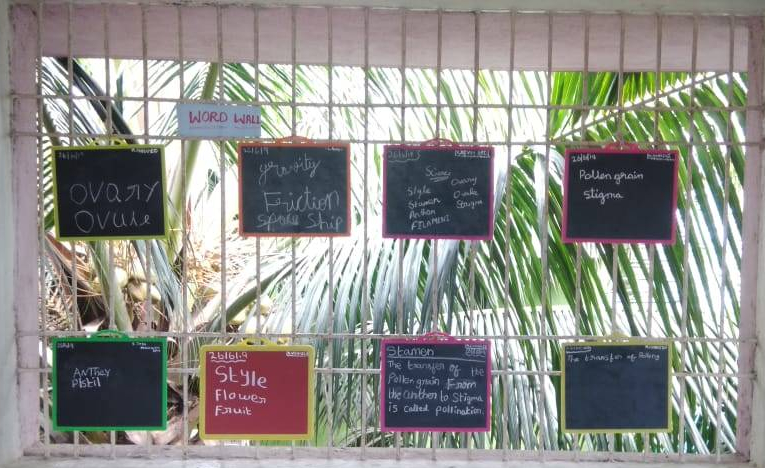
“Miss, I have written the definition of pollination on MY BOARD. Please have a look”- exclaimed a grade 4 student. Each student of that grade has his/her own small slate that is hanging over the windows. They use the slates as students’ board to showcase their learnings.
“Hey see here, I am one of the stars of this class”- joy burst among a bunch of students, on seeing each one of their names on the wall.
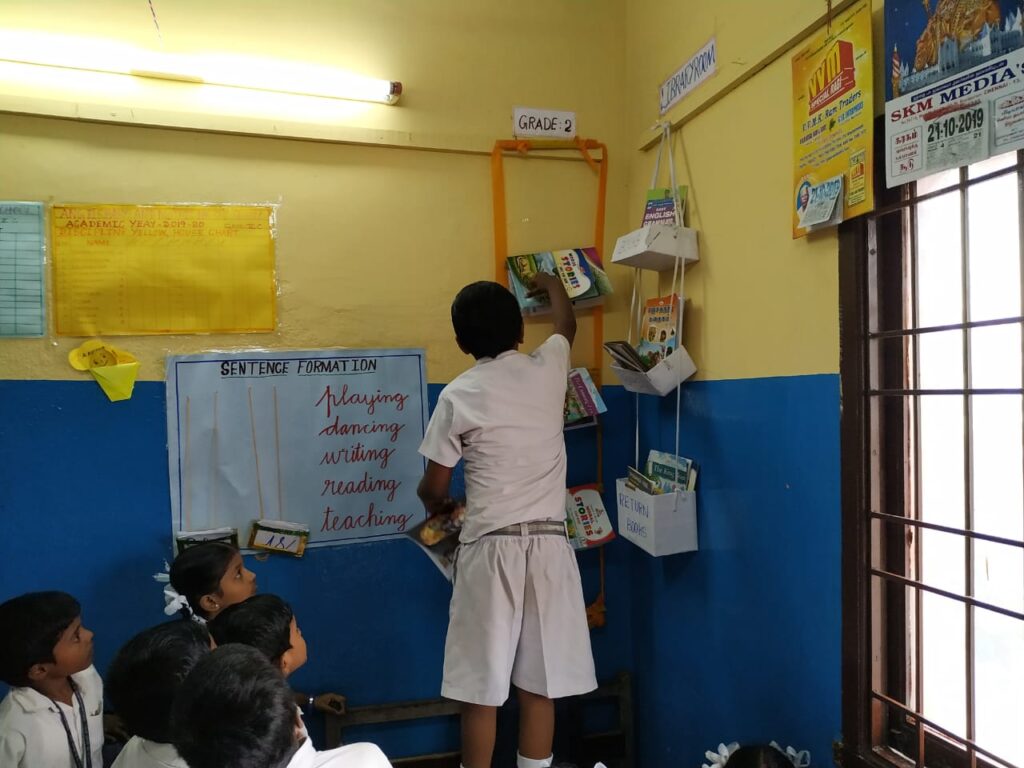
One of the classrooms has its own notice board- to display students’ work, to track students’ behavior and to celebrate important days. Another one has a welcoming message in an appealing font that is a pleasure to look at. There are simple norms written by students on classroom walls and corridors that need to be followed inside the school campus.
These are some of the clear evidence that the physical space of the school has been given importance and attention they deserve. How did this happen? We at Vidhya Vidhai believe that our actions reflect our mindset. Hence we are deeply rooted to shift in the mindset of the stakeholders to expect a behavioral change. The classroom today at school is vastly a different place than it was years ago. They were once a place with old torn out charts on the walls and some are almost empty, projecting dull environment.
“How to create an effective learning environment?” was one of the tasks of Kartka Kasadara, in which teachers explored various ways of designing their own imaginary classrooms. It includes different seating arrangements, classroom materials on walls, and positive classroom management techniques. When teachers were aware of creating an attractive and meaningful classroom environment, they started experimenting in class with real students. The time has come to create a conducive situation for them to effectively implement their ideas in their classrooms. Without any doubt, it was the School Leader who could create such a situation.
Mr. Rupak, the Correspondent of the school, is a young vibrant leader, who proactively undertakes a range of initiatives, based on analyzing the school’s needs. During our Leaders’ Meet, a detailed discussion happened with the leader, on various areas that school needs improvement. When the leader understands the importance of the physical environment in determining the quality of learning, he planned to reform the physical spaces of the school as a conducive space for learning. Various infrastructural improvements were carried out in the school during summer holidays– Attractive Kindergarten classrooms, separate washrooms ensuring with adequate water supply, colorful school premises, a separate waiting hall for visitors and space for storing sports equipment. As a part of the process, a separate task of designing classroom walls was planned and executed with teachers.
But wouldn’t it be strange to design a classroom space for children without even 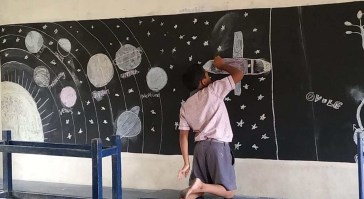 considering their opinion on how “their classroom” and “their learning environment” should be? Here, in our school, students were also a part of transforming their classes that built their ownership in saying- “This is my classroom”.
Though it was executed by teachers, the Leader was also a part of all the phases– designing ideas for classroom, capacity building of teachers, preparing master plan with all teachers, formulating an implementation strategy, bringing in necessary materials, monitoring and supervision. The overall process happened at two levels-
1) Designing built elements- walls, windows, corridors, staircases,
2) Improving indoor and outdoor spaces to maximize the learning experience
Sample works from the field-
- Students’ board– When classroom provides an opportunity for students to interact with words, they are likely to create a conducive literacy learning environment. The class has 24 slates hanging over, with each student name written on it. This is the space where students can practice writing words or sentences that they encounter in their lessons. The added advantage of the board is that it allows for mistakes and provides a chance to self-correct.
- Visuals– Some classrooms have separate space where certain concepts are visually accessible to students all the time, by just looking at the contents over and over again. In classrooms with limited space, teachers tied threads diagonally across the room to present grade relevant contents.
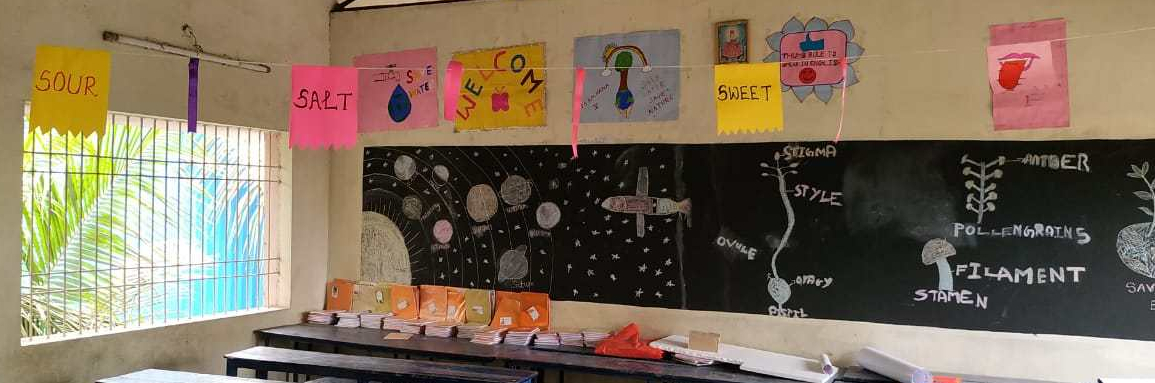
- Rules and Norms- School and classroom norms were clearly displayed on the spaces where students frequently encounter with– classroom doors and corridor walls, that reinforces the school culture all the time.

An unstimulating physical setting of the school has now been changed with simple innovations, with the combined efforts of school leader, teachers, and students. “Children are constantly interacting with the physical environment of their schools consciously or unconsciously. Yet not enough attention is paid to the importance of the physical environment for learning. When children are asked about the kinds of spaces they like, very often they want to be in a place that is colourful, friendly, and peaceful.”- says NCF 2005. We are happy to see our schools marching towards creating such a learning place for students.
-Karunya D